As trichologists and hair health specialists, we frequently consult with women experiencing subtle widening of their part lines, reduced ponytail volume, or sudden shedding. If you are asking why is my hair thinning female , you are encountering a multi-factorial biological response rather than a superficial cosmetic problem. Hair follicles are remarkably sensitive metabolic indicators that reflect underlying physiological stress, hormonal fluctuations, and cellular nutrient availability.
Addressing female hair loss effectively requires moving past temporary topical fixes and focusing on root-cause biology. By identifying the exact mechanisms destabilizing your scalp ecosystem, you can restore balance to your hair follicles and support sustainable growth from within.
The Biology of Female Hair Loss and Follicular Dysregulation
To understand why hair density decreases, we must examine the underlying hair growth cycle. Each follicle on your scalp operates independently through three primary phases: anagen (active growth), catagen (transition), and telogen (resting and shedding). Under normal physiological conditions, roughly 85% to 90% of your hair remains in the anagen phase for two to six years, while only 10% to 15% rests in the telogen phase.
When internal imbalances occur, this delicate cycle becomes disrupted. Systemic stressors accelerate the transition of growing follicles into premature resting states, resulting in excessive daily shedding. Over time, persistent biological triggers cause progressive hair follicle miniaturization, where individual strands grow back finer, shorter, and less resilient.
How the Hair Growth Cycle Shifts During Hair Shedding
When investigating various hair shedding causes, trichologists look for metabolic signals that prematurely abort the anagen phase. Factors such as oxidative stress, localized microinflammation, and hormonal shifts force active hair matrix cells to cease division. As a result, the follicle enters catagen prematurely before entering telogen, leading to noticeable thinning hair women experience across the scalp.
Anagen Phase Shortening vs Telogen Phase Elevation
Anagen phase shortening reduces the maximum length your hair can achieve before shedding. Conversely, telogen phase elevation increases the percentage of resting follicles from 10% up to 30% or more. Extending the anagen phase through targeted nutraceutical intervention helps maintain healthy follicular anchor structures and prolongs active growth cycles.
Primary Root Causes of Thinning Hair in Women
Female hair thinning rarely stems from a single isolated cause. In clinical practice, we observe a complex interplay between genetics, endocrinology, lifestyle stress, and metabolic health.
Hormonal Imbalances and Androgen Sensitivity
Hormones exert a powerful influence over hair follicle behavior. A key factor in hormonal imbalance hair loss is dihydrotestosterone (DHT), a potent androgen derived from testosterone. While DHT is often associated with male hair loss, women also produce circulating androgens. When enzyme levels like 5-alpha reductase increase, DHT binds to androgen receptors in susceptible hair follicles, triggering progressive miniaturization.
Additionally, estrogen decline hair changes during perimenopause, menopause, or post-birth transitions alter the estrogen-to-androgen ratio. Lower estrogen levels leave hair follicles unprotected against circulating DHT. Incorporating standardized botanicals such as saw palmetto for hair support can help inhibit 5-alpha reductase activity , mitigating DHT hair loss women frequently face.
Chronic Stress, Cortisol Elevators, and Follicle Exhaustion
Physical and emotional stress induce elevated systemic cortisol levels. Cortisol hair loss occurs because excess stress hormones disrupt the extracellular matrix components surrounding hair follicles, including hyaluronic acid and proteoglycans. This breakdown deprives follicles of essential hydration and structural anchoring.
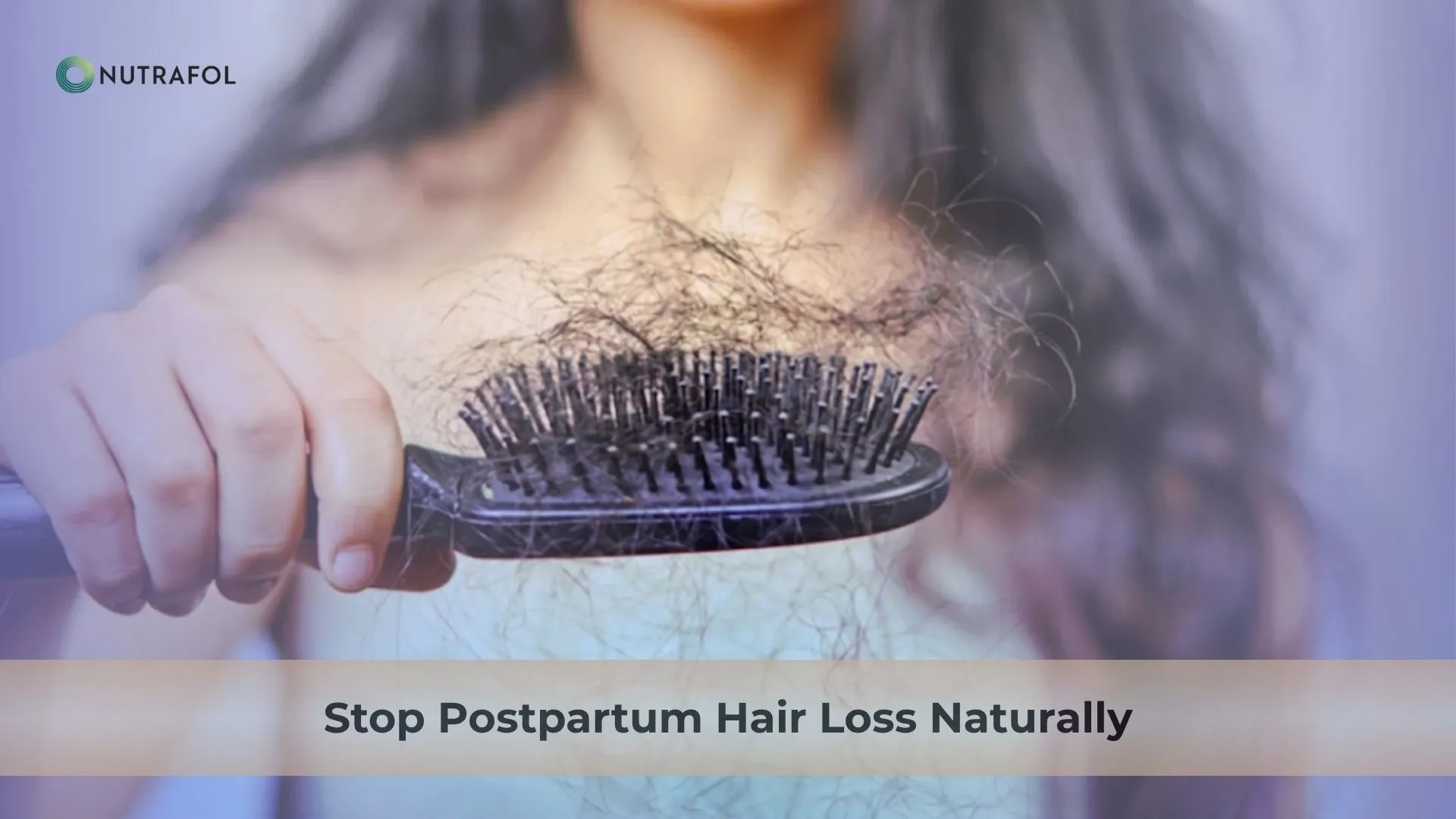
Furthermore, acute physiological stressors, such as severe illness or childbirth, trigger postpartum hair thinning. This acute form of shedding pushes vast numbers of anagen hairs into telogen simultaneously, with visible shedding appearing roughly two to three months after the triggering event.
Nutritional Gaps, Gut Absorption, and Micronutrient Deficiencies
Hair matrix cells are among the fastest-dividing cells in the human body, requiring a constant supply of micronutrients, amino acids, and antioxidants. A subtle micronutrient deficiency in iron, zinc, vitamin D, or B vitamins can impair cellular division.
However, consumption alone does not guarantee cellular delivery. Poor gut health, gut lining permeability, or digestive enzyme deficiencies limit ingredient absorption. When nutrients fail to reach hair follicles, localized scalp microinflammation develops, further compromising follicular health and growth potential.
Differentiating Telogen Effluvium and Female Pattern Thinning
Distinguishing between acute telogen effluvium and female pattern thinning (androgenetic alopecia) is essential for selecting appropriate interventions. Telogen effluvium presents as sudden, diffuse thinning across the entire scalp, typically triggered by stress, illness, or rapid weight loss. This condition is usually temporary once the underlying stressor resolves.
In contrast, androgenetic alopecia develops gradually, manifesting as progressive widening of the center part while maintaining the frontal hairline. To stay informed on clinical studies and wellness strategies, explore our comprehensive collection of expert insights on the Nutrafol Blog. Identifying whether your thinning is diffuse or pattern-based allows for a more personalized care strategy.
Multi-Target Nutraceutical Support for Long-Term Hair Density
Because hair loss involves multiple interconnected biological systems, single-ingredient supplements often fall short. Comprehensive nutraceutical hair support addresses root causes simultaneously by combining clinical-grade botanicals, adaptogens, and marine collagen.
Biocatalysts, Botanical Actives, and Ingredient Absorption
Formulations designed for hair density restoration rely on bioavailable, medical-grade ingredients. For example, sensoril ashwagandha lowers stress-induced cortisol levels, while standardized curcumins neutralize oxidative stressors that impair hair follicle stem cells. Optimizing gut digestion ensures these bioactive compounds are absorbed and delivered directly to the dermal papilla.
Consistent daily dosage is paramount. Hair follicles require continuous biochemical signals over 3 to 6 months to transition out of resting phases and rebuild robust protein structures. To uncover the specific root causes affecting your scalp, Take the hair quiz and customize your regimen.
Want to optimize your hair regrowth journey for faster results? Check out our Nutrafol dosage guide to find the ideal routine for your hair profile.
Common Questions About Female Hair Thinning
How long does it take to see results when treating female hair loss?
Hair grows at an average rate of half an inch per month. When utilizing targeted nutraceuticals, initial reductions in shedding usually occur within 1 to 3 months, followed by visible improvements in hair thickness and scalp coverage between 3 to 6 months.
Can thyroid hair loss be managed alongside nutritional support?
Yes, thyroid imbalances directly alter metabolic rates and hair follicle energy production. Addressing thyroid dysregulation with your physician while providing nutraceutical support helps rebuild compromised hair structures.
Is hair shedding causes linked to daily hair washing?
No, washing your hair does not cause hair loss. Hairs lost during washing were already detached from the follicle matrix weeks prior during the telogen phase. Gentle scalp hygiene supports a healthy microbiome, reducing scalp microinflammation.
How does stress directly trigger cortisol hair loss?
Elevated cortisol signals hair follicles to exit the active growth phase prematurely. Cortisol also degrades scalp matrix molecules, weakening the anchoring system that holds hair strands in place.
Can menopausal hair loss be prevented?
While age-related estrogen decline hair shifts are natural , proactive management using DHT-balancing botanicals and hormone-supporting nutraceuticals can significantly minimize follicle miniaturization and preserve hair volume.