As a trichology specialist and wellness consultant, I frequently speak with clients who are feeling entirely overwhelmed by the sheer volume of hair products on the market. With countless bottles promising miraculous results overnight, it is incredibly common to wonder how to choose a hair growth supplement that actually works for your specific biology. Selecting the right solution is not about finding a magic pill. It is about understanding your own physiological needs and identifying a scientifically formulated product that supports your body from within.
Hair thinning is a deeply personal experience. However, the biological mechanisms driving it are very measurable and treatable. When you are looking for real results, you need a multi-target nutraceutical approach rather than a basic daily vitamin. This guide will help you cut through the marketing noise, evaluate clinically proven hair vitamins, and make an informed decision for your long-term hair wellness journey.
Moving Past the Hype: The Science of Hair Wellness
Before you can choose the most effective supplement, you must understand how your hair actually grows. Your hair is an incredibly sensitive metabolic indicator. When your body experiences internal imbalances, your hair is often the very first place those issues show up. A proper hair vitamins guide always begins with clinical science, because surface-level fixes simply cannot outpace internal dysregulation.
Understanding Your Scalp Ecosystem
Every single hair follicle on your scalp operates within its own independent growth cycle. This cycle includes the anagen phase for active growth, the catagen phase for transition, and the telogen phase for resting and shedding. In a balanced scalp ecosystem, the vast majority of your hair remains securely in the active anagen phase. However, when internal thinning hair triggers disrupt your system, this delicate balance shifts dramatically.
How Systemic Stressors Impact the Growth Cycle
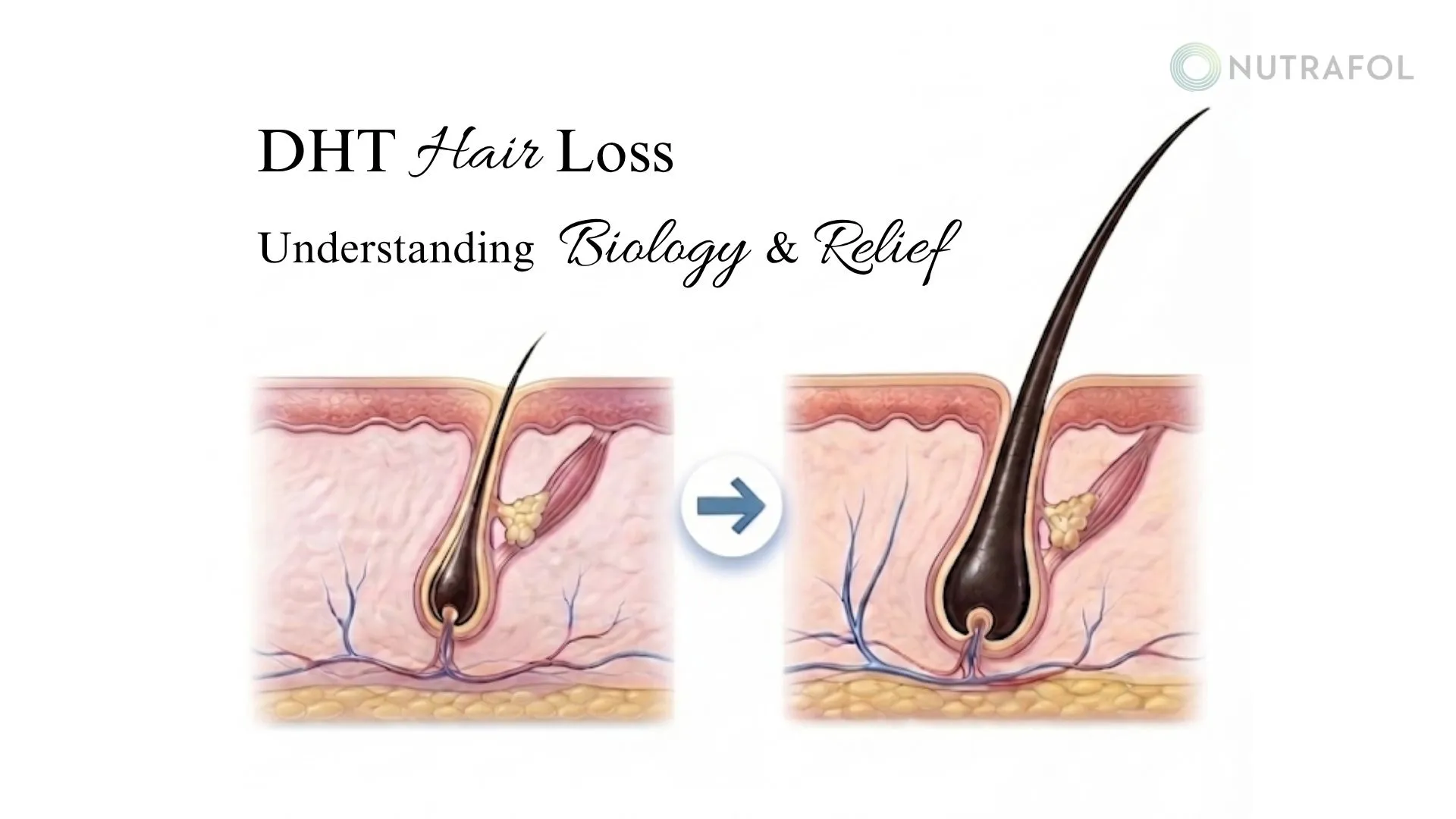
Systemic stressors force active hair follicles into premature resting states. This biological shift leads to excessive daily shedding and progressive hair follicle miniaturization. Over multiple cycles, individual strands grow back finer and weaker. To truly restore your hair, a supplement must actively prolong active growth cycles and protect the hair matrix cells from cellular exhaustion.
Key Factors in a Comprehensive Hair Vitamins Guide
So, how do you evaluate the countless options available? Knowing exactly what to look for can save you months of frustration. The most effective hair wellness formulas are physician-formulated supplements that prioritize deep absorption and whole-body wellness.
Bioavailability and Nutrient Absorption
It does not matter how many vitamins are packed into a capsule if your body cannot absorb them. High-quality supplements focus heavily on bioavailability and nutrient absorption. If your gut microbiome is compromised, or if a product uses cheap, synthetic vitamin forms, those nutrients will never reach your hair follicles. Always look for formulas that incorporate gut-supporting elements or highly bioavailable active compounds to ensure maximum delivery to the dermal papilla.
Evaluating Hair Supplement Ingredients
When reading a label, you want to identify components that address multiple systems in the body. Analyzing hair supplement ingredients requires looking past standard biotin. You want to see adaptogens, antioxidants, and structural proteins. For instance, incorporating medical grade botanicals like Ashwagandha and Marine Collagen works comprehensively to balance your system and promote a healthy growth cycle.
Medical-Grade Botanicals vs. Standard Extracts
The difference between standard extracts and medical-grade botanicals is monumental. Medical-grade ingredients are highly concentrated, standardized, and clinically tested for efficacy. They provide the precise biochemical signals your follicles need to transition out of the resting phase. If you want to dive deeper into the latest clinical research on botanical efficacy, you can always read our latest insights on the Nutrafol Blog.
What to Look For When Targeting Root Causes
The biggest mistake consumers make is treating hair thinning as a localized cosmetic issue. In reality, hair thinning is a whole-body symptom. The best formulations address specific root causes of hair thinning, such as stress, nutrition, lifestyle, and hormonal changes. By targeting these triggers simultaneously, you create an optimal growth state for your follicles.
Hormonal Imbalances and DHT Sensitivity
Hormones play an enormous role in hair density. Dihydrotestosterone (DHT) is an androgen that can bind to receptors in your scalp, shrinking follicles over time. DHT sensitivity can be caused by genetics, everyday stress, poor diet, and toxins. An effective supplement must include targeted botanical inhibitors like Saw Palmetto or Maca to help balance hormones and defend the hair follicle against this miniaturization process.
Stress Management and Cortisol Regulation
Physical and emotional stress elevate your systemic cortisol levels. Chronically high cortisol degrades the structural matrix surrounding your hair strands, completely destabilizing their anchoring system. Adaptogens like Ashwagandha for hair health are essential because they actively regulate cortisol and help manage the systemic stressors that force hair into the shedding phase.
Building a Long-Term Hair Wellness Plan
Achieving visibly thicker, fuller hair takes time and dedication. Because hair only grows roughly half an inch per month, you are committing to a biological rebuilding process. You should expect to see reduced shedding in the first few months, followed by significantly improved fullness and volume over a span of three to six months.
The Importance of Daily Dosage Consistency
Your hair follicles require uninterrupted support to maintain a healthy growth cycle. Daily dosage consistency is the single most critical factor in seeing clinical results. Skipping days deprives your hair matrix cells of the clinical-grade nutrition they desperately need to divide and build strong hair fibers. Committing to a daily regimen is how you achieve sustainable, long-lasting hair density.
Conclusion: Investing in Holistic Hair Health
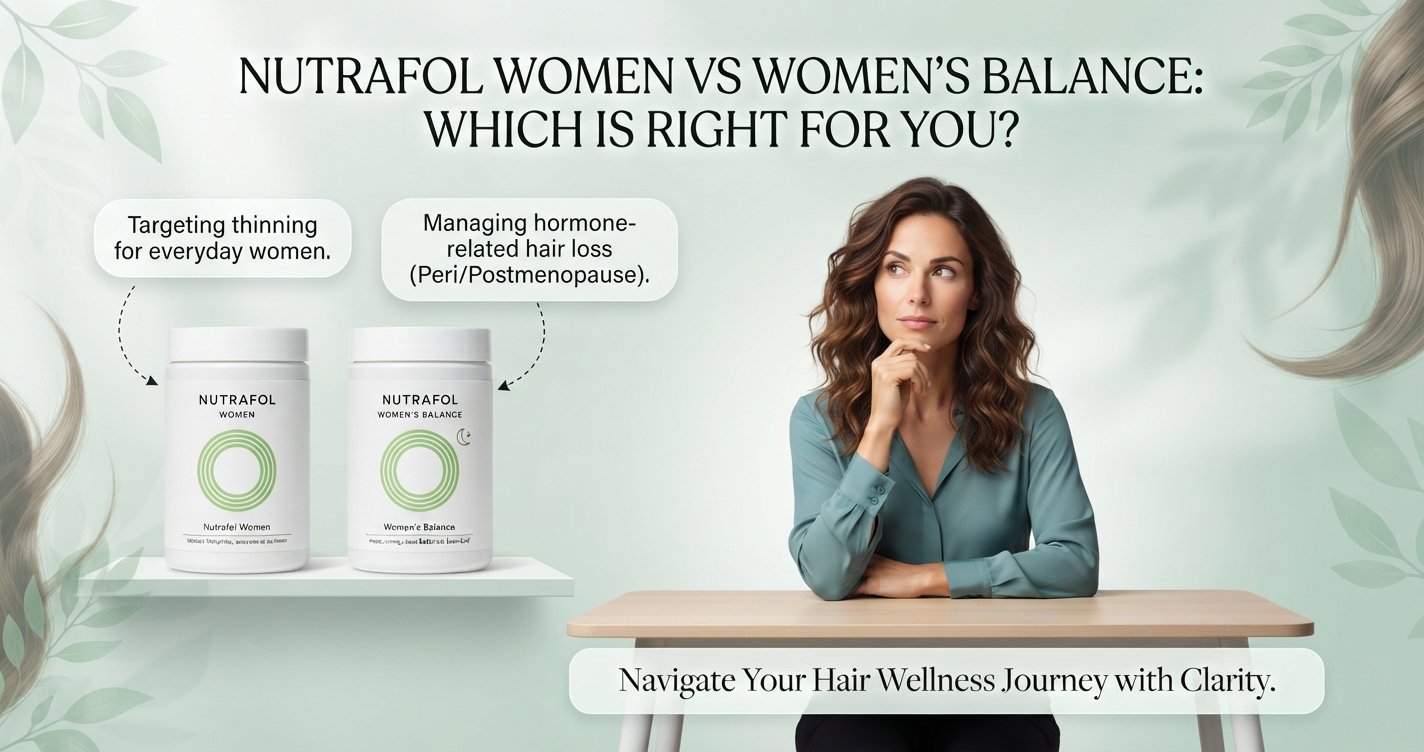
Knowing how to actually choose a product comes down to demanding clinical proof and customized care. You need a targeted nutraceutical intervention that speaks directly to your body's unique life stage and physiological needs. Whether you are addressing postpartum recovery, menopausal hormonal shifts, or daily environmental stress, there is a specific formulation designed to support you.
Want to optimize your hair regrowth journey for faster results? Take a moment to Compare formulas and find the exact routine tailored to your unique hair profile.
FAQs About Finding the Right Formula
1. How long does it take for a high-quality hair supplement to work?
Results vary based on individual biology, but with consistent use, you can typically expect reduced shedding and stronger hair within 1 to 3 months. Visibly thicker, faster-growing hair and better scalp coverage usually become apparent after 6 months of continuous use.
2. Should I take different supplements as I age?
Absolutely. Your body's metabolic and hormonal needs shift as you age. For example, formulas designed for women over 45 specifically target estrogen drops and age-related metabolism changes, whereas formulas for younger women focus heavily on everyday stress and lifestyle factors.
3. Are medical-grade botanicals safe for daily use?
Yes, when they are physician-formulated and clinically tested. Medical-grade botanicals are standardized to ensure you receive a safe, consistent, and highly effective dose without compromising your overall health.
4. Will a hair supplement help with shedding caused by stress?
Yes, provided it includes specific stress-adaptogens. Ingredients like Ashwagandha actively work to balance elevated cortisol levels, directly addressing the systemic stress triggers that force your hair into the shedding phase.
5. Can men and women use the exact same hair vitamins?
While both men and women experience hair thinning, their primary biological triggers often differ significantly in concentration and mechanism. It is highly recommended to use gender-specific formulations that cater to these distinct hormonal and metabolic profiles to achieve maximum efficacy.